A hunchback is more than just a posture problem for many people. It can cause physical complaints, insecurity of appearance and a feeling of stiffness or reduced range of motion. Perhaps you notice that your upper back is becoming more rounded, or you hear from others that you “hunch over”. What exactly does this mean? And more importantly, what can you do about it?
At The Family Chiropractor, we look beyond just the visible curvature. We examine where the hunchback comes from and how to bring your body back into balance.

What is a hunchback?
A hunchback is an excessive curvature of the upper back, also called an enhanced kyphosis. The upper back should naturally be slightly curved. This curvature is normal and functional. However, when this curvature becomes excessive, a clearly visible bulge develops.
Colloquially, this is also known as a hunchback. That term can describe various postural abnormalities, but a hunchback specifically involves excessive forward bending in the upper back.
How does a hunchback occur?
A hunchback usually develops gradually. It is rarely something that appears overnight. There are several possible causes.
A common cause is prolonged poor posture. Think of sitting a lot at a computer, working with a bent neck or looking at your phone for a long time. When muscles and joints are in the same wrong position day after day, the body adapts to it.
Muscle weakness in the upper back and trunk also often plays a role. If the back muscles do not have enough strength to keep you upright, gravity takes over, so to speak.
In young people, a growth spurt can affect posture. During rapid growth, muscles sometimes become unbalanced in relation to the skeleton. In the elderly, wear of the spine or osteoporosis can contribute to enhanced curvature.
In some cases, a structural abnormality underlies it, as in Scheuermann's disease. In this case, the vertebrae develop differently, creating a distinct hunchback.
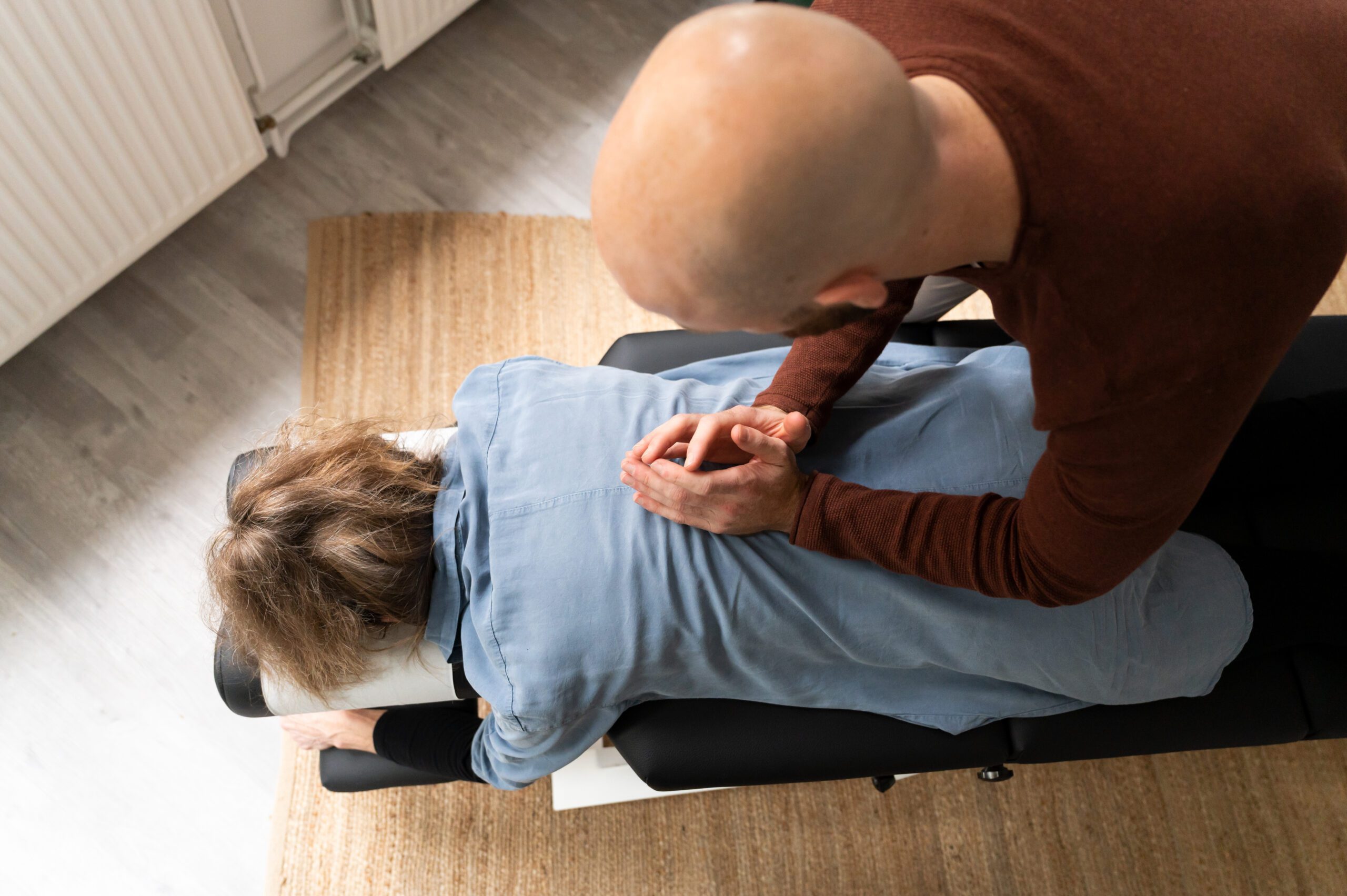
What symptoms are associated with a hunchback?
A hunchback can cause various complaints. Some people experience mainly aesthetic concerns, while others have obvious physical complaints. Common symptoms are:
- Pain or stiffness in the upper back
- Tension complaints in neck and shoulders
- Headache
- Reduced shoulder mobility
- Quicker feeling of tiredness in the back
In the longer term, strong curvature can affect breathing. When the chest cannot expand as much, deep breathing becomes more difficult. Pressure distribution in the spine can also change, putting additional strain on other parts of the back.
Is a hunchback the same as a crooked back?
The term crooked back is often used broadly. It can refer to a hunchback, but also to other postural abnormalities such as scoliosis. A hunchback involves an enhanced forward curvature in the upper back. In scoliosis, the spine twists and bends sideways.
Careful analysis is therefore important. Not every crooked back is the same and the approach differs from one situation to another.
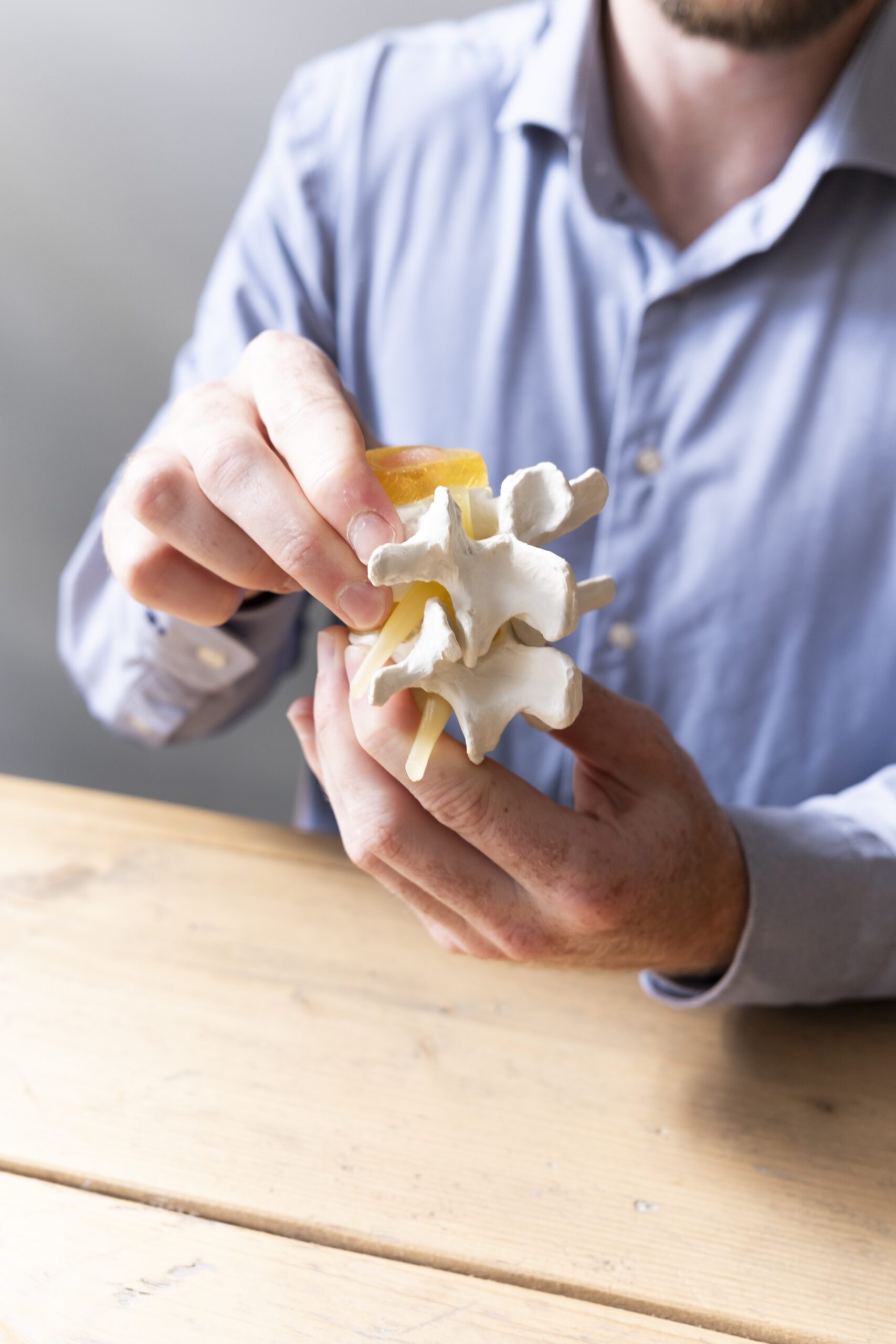
What can a chiropractor do for a hunchback?
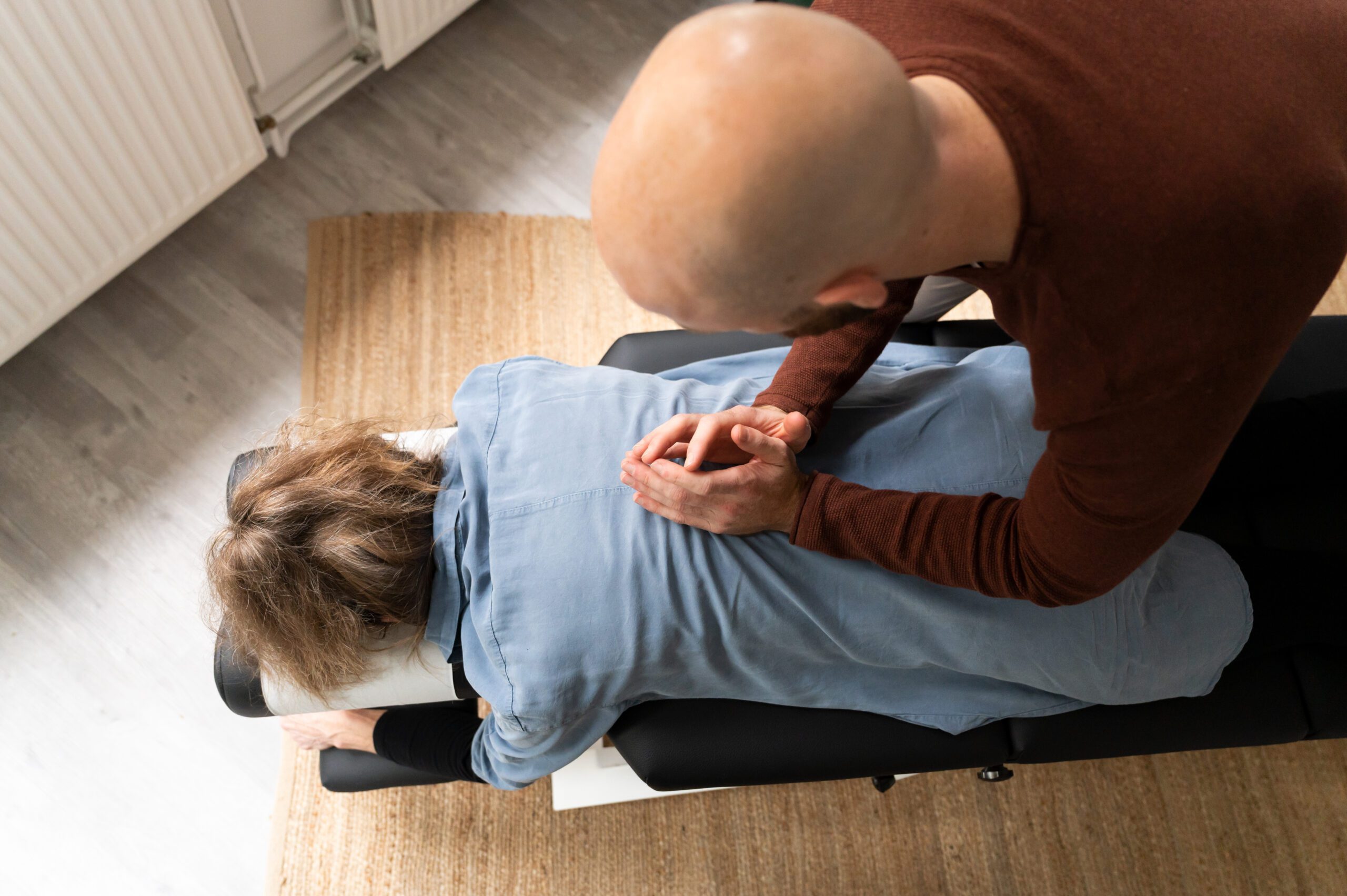
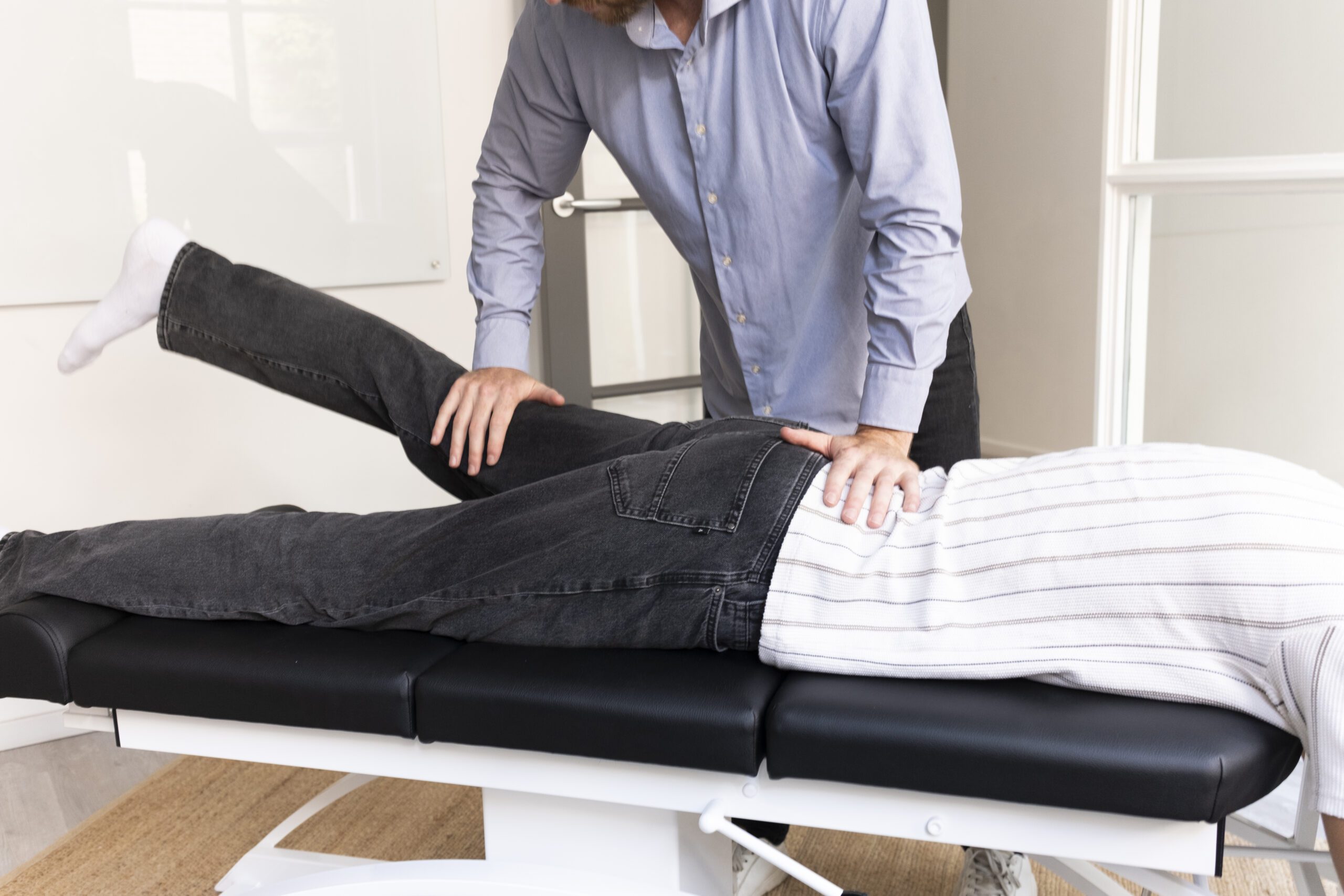
At The Family Chiropractor, we look at the overall picture. We examine not only the visible curvature, but also the mobility of the spine, muscle balance and the way your body compensates.
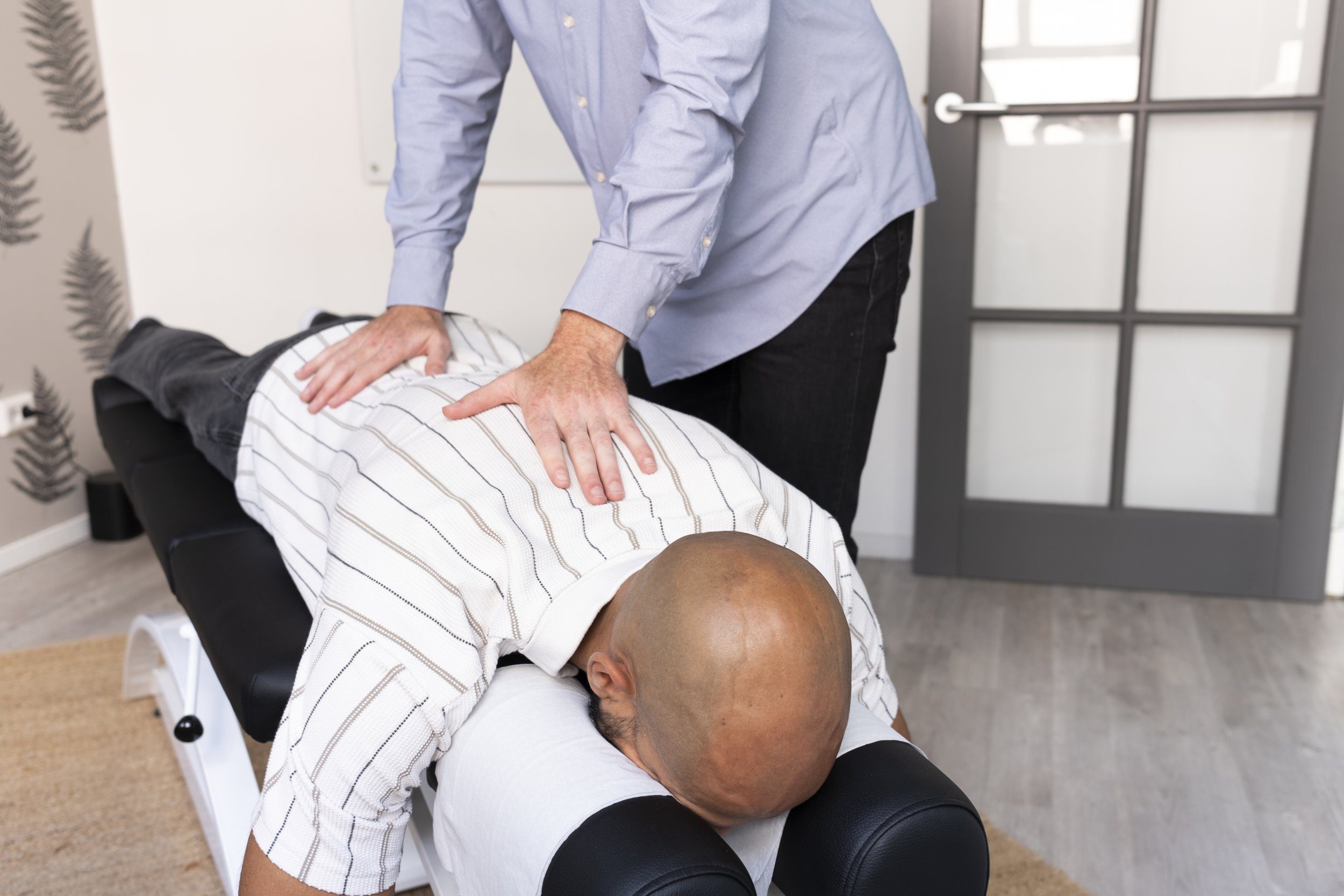
With targeted chiropractic corrections, we improve the mobility of stuck joints in the spine. When the vertebrae can move more freely again, the body gets the chance to adopt a more natural posture.
A strong muscle base is essential to maintain the improved posture. We guide you through this step by step, tailored to your age, condition and goals.
It is important to note that we take an honest look at what is possible. With a posture-related hunchback, there are often many gains to be made. With structural abnormalities, we focus on optimising function, reducing symptoms and preventing further deterioration.
Why timely intervention is important
The longer a hunchback exists, the more the body adapts to it. Muscles shorten or weaken and joints lose their optimal mobility. Early intervention increases the chances of recovery and prevents symptoms from spreading to the neck, shoulders or lower back.
At children and young people, it is especially important to be alert to changing attitudes. The body is still developing and can often respond well to targeted guidance.
Working on straight, strong posture
A hunchback is not a matter of simply “sitting up straight”. It is an interplay of joints, muscles, posture and daily habits. With the right guidance, your body can relearn what is a healthy, natural posture.
Are you experiencing symptoms or recognise yourself with a crooked back that is becoming increasingly apparent? Then it is wise to have it professionally assessed. Together, we will look at the cause and draw up a personal treatment plan that suits your situation.
At The Family Chiropractor, we believe that a healthy spine is the foundation for a vital life. By focusing on restoring range of motion and balance, we help you not only stand straighter, but also move more freely and stand more confidently in your body.
No hump, but back pain? Then check out this page!